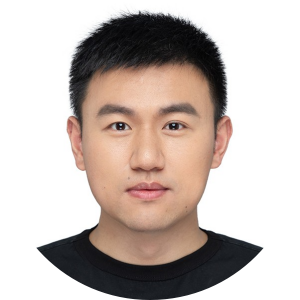
Prof. Hao Zhang
Fellow of American Statistical Association and an Elected Member of the International Statistical Institute
Michigan State University, USA
Biography: Hao Zhang is Professor and Chair at the Department of Statistics and Probability at Michigan State University. He is Fellow of American Statistical Association and an Elected Member of the International Statistical Institute. He has served editorial boards of Journal of the American Statistical Association, Statistica Sinica, Environmetrics, and Statistics & Probability Letters. His research interests are primarily in spatial and spatio-temporal statistics. His work includes both theoretical investigation into asymptotic properties of machine learning methods for spatial data and development of algorithms for the analysis of big spatial data. He collaborates with researchers in ecology, environmental sciences, climatology, natural resources and health sciences.

Prof. Ji Wei
Shandong University, China
Biography: Ji Wei received his M.S. degree in BeiJing Institute of Technology in 2003 and his Ph D degree in 2006 from Beijing University of Posts and Telecommunications. He is working as a professor in Shandong University. In 2012.9-2013.9, he worked as visiting scholar in Queen’s University Canada. His researching interests include: Artificial Intelligence, Data Center Networking, High speed optical switching and networking, Optical access networking.

Prof. Laxmisha Rai
Fellow of the Royal Statistical Society (FRSS), UK
Shandong University of Science and Technology, China
Speech Title: Learning Edge: Model-based Edge Learning through Prompt Engineering for Personalized Education
Abstract: The growth of Large Language Models (LLMs) and the influence of Generative Artificial Intelligence (GenAI) tools have given rise to novel learning paradigms for educators. In this paper, we propose Model-based Edge Learning (MbEL), an “edge learning” framework that shifts learning from centralized, human-centric institutions to the “edge” of the network, where individual users interact conversationally with a pre-trained foundational model to acquire knowledge and skills. Unlike traditional edge computing, which focuses on data processing, MbEL emphasizes cognitive offloading and personalized knowledge acquisition. This paper conceptualizes MbEL, illustrating its principles through case studies conducted with the DeepSeek model using prompt engineering methods such as zero-shot, few-shot, and chain-of-thought (CoT) prompting. As this study focuses exclusively on personalized learning through prompt engineering, to ensure response quality, we established a benchmarking system using LLM-as-a-Judge framework with structured prompt templates. This allows learners to systematically evaluate and verify the answers generated by the model. The proposed method is tested for generation, and evaluation of standard algorithms taught in the undergraduate Data Structures course serving as the evaluation domain. Furthermore, we discuss its profound implications for education, including the shift from knowledge retrieval to reasoning development, and challenges such as model bias and academic integrity. However, ethical considerations such as model hallucinations and trusting incorrect answers remain critical, underscoring the continued necessity of human oversight in guiding the student learning process.
Biography: Laxmisha Rai is a professor at College of Electronic and Information Engineering, Shandong University of Science and Technology, Qingdao, China. He received Ph.D degree in Electronics from Kyungpook National University, South Korea. He worked as a Post-Doctoral Fellow, at Intelligent Robot Research Center, Soongsil University of South Korea. He is a Senior Member of IEEE, Senior Member of ACM, and Fellow of the Royal Statistical Society (FRSS), UK. His research interests include generative artificial intelligence, autonomous mobile robots, real-time systems, embedded systems, Internet of Things (IoT), wireless sensor networks, MOOC, and Bilingual Education. He is the author of over 80 publications including patents, books, book chapters, book reviews, international journal articles, international conference proceedings, and magazine articles. He is currently serving as Associate Editor of IEEE Access Journal, Editorial Board Member of Journal of Information Systems Education, and Editorial Review Board Member of Social Sciences & Humanities Open (Elsevier) Journal. His papers appeared in reputed journals such as Knowledge-Based Systems, IEEE Transaction on Intelligent Transportation Systems, IEEE Potentials, IEEE Sensors Journal, IEEE Transactions on Systems, Man, and Cybernetics, Part A: Systems and Humans etc.

Prof. Jiehan Zhou
Director of the International Education and Research Collaboration Office in the School, Chair of IEEE-Qingdao CH10879
Shandong University of Science and Technology, China
Biography: Professor Jiehan Zhou is a Ph.D.
supervisor and a professor at the School of Computer Science and
Engineering, Shandong University of Science and Technology
(SDUST), the Director of the International Education and
Research Collaboration Office in the School, the Chair of
IEEE-Qingdao CH10879, an affiliate research fellow of the
Middleware Systems Research Group (the MSRG Lab), University of
Toronto since 2010, the Docent (Adjunct Professor) at the
Department of Information Technology and Electrical and
Engineering, University of Oulu, Finland. He received his Ph.D.
in Mechanical Automation from Huazhong University of Science and
Technology in 2000 under the supervision of Prof. CAS
academician Shuzi Yang (Former President of HUST) and his Ph.D.
in Computer Engineering from the University of Oulu in 2011.
Professor Zhou has worked at top universities and research
institutions worldwide, including Tsinghua University, VTT
Technical Research Centre of Finland, INRIA in France,
Luxembourg Institute of Science and Technology (LIST),
University of Oulu, and the University of Toronto. With over 20
years of international research and industrial experience, he
has held positions such as Senior Scientist, Team Leader,
Laboratory Director, General Manager, and Principal Engineer at
Huawei Canada. He has also served as visiting professors at
several universities in China.
Professor Zhou is
dedicated to research in the fields of intelligent
manufacturing, system modeling and simulation, industrial
internet, industrial big data, industrial large models, and
digital twins. He has led or participated in numerous research
projects funded by China, EU, and Canada, including the ERCIM
Fellowship Program, the EU FP6-Amigo Project, and the EU
ITEA4-CAM4Home Project. To date, he has published over 150
research papers in these areas.

Prof. Xingquan Wang
Gannan Normal University, China
Biography: Xingquan Wang was born in October
1980. He currently serves as the head of the Master's degree
program in Electronic Science and Technology, the chairman of
the Physics Society of Ganzhou City, and the member of the
Council of Jiangxi Province's Physical Society. He received his
Ph.D. degree in optics from Changchun University of Science and
Technology in 2010. Following his graduation, he worked as a
postdoctor in the Institute of Physics, Chinese Academy of
Sciences. In 2012, he became a teacher in Gannan Normal
University. He visited Australia as a government-sponsored
visiting scholar at Queensland University of Technology for one
year in 2016. He engaged in the fundamental research in
low-temperature plasma discharge technology and electronic
technology applications, publishing over 50 SCI/EI indexed
papers and holding more than 30 authorized patents. He has led 8
teaching and research projects at or above the provincial level,
including projects funded by the National Natural Science
Foundation, and has been awarded the Jiangxi Provincial Natural
Science Award.

Assoc. Prof. Chuanting Zhang
Shandong University, China
Biography: Chuanting Zhang is an associate professor at Shandong University, Jinan, China. He previously worked as a senior postdoctoral researcher at the University of Bristol and a postdoctoral researcher at King Abdullah University of Science and Technology (KAUST). His research interests encompass spatiotemporal data mining and intelligent networks. He has led several projects, including those funded by national talent programs, the National Natural Science Foundation of China, and the Shandong Province Excellent Youth Science Fund Project. He has proposed a series of wireless traffic prediction algorithms, with publications in top-tier journals and conferences, including IEEE JSAC and IEEE INFOCOM. His research achievements have been recognized with awards such as the IEEE ICCT Young Scientist Award, the Shandong Province Excellent Doctoral Dissertation Award, the Excellent Doctoral Dissertation Award of the Shandong Artificial Intelligence Society, and the Best Paper Award at IEEE SmartData. He is a Senior Member of IEEE, a Member of ACM, and a committee member of the CCF Technical Committee on Network and Data Communications.
Personal Website: https://faculty.sdu.edu.cn/ctzhang

Associate Researcher Shuai Ma
Peng Cheng Laboratory, China
Biography: Shuai Ma received the B.S. and Ph.D. degrees in communication and information systems from Xidian University, Xi'an, China, in 2009 and 2016, respectively. From 2014 to 2015, he was a Visiting Scholar with the Department of Electrical and Computer Engineering, Texas A&M University, College Station, TX, USA. From 2016 to 2019, he has been an associate Professor with the School of Information and Control Engineering, at the China University of Mining and Technology, Xuzhou, China. From 2019 to 2022, he worked as a Postdoctoral Fellow with Telecom Paris, France. Since 2023, he has been an Associate Researcher at Peng Cheng Laboratory, Shenzhen, China. His research interests include semantic communications, visible light communications, and network information theory.

Assoc. Prof. Mingjie Shao
Academy of Mathematics and Systems Science, Chinese Academy of Sciences, China
Biography: Mingjie Shao received a bachelor’s degree from Xidian University, China, in 2015, as part of the “Excellent Engineer Education Program.” In 2020, he earned a Ph.D. in Electronic Engineering from the Chinese University of Hong Kong, supported by the “Hong Kong PhD Fellowship Scheme (HKPFS)” under the supervision of Prof. Wing‑Kin Ma (IEEE Fellow). From 2020 to 2023, he worked as a postdoctoral researcher in the Department of Electronic Engineering at the Chinese University of Hong Kong. He was then a Professor, awarded “Qilu Young Scholar”, in the School of Information Science and Engineering at Shandong University during 2023‑2024. Currently, he is an Associate Professor in the State Key Laboratory of Mathematical Sciences, Academy of Mathematics and Systems Science (AMSS), Chinese Academy of Sciences (CAS), and has been awarded the “Chen Jingrun Future Star.”
His main research interests include: 1) Signal processing for wireless communication; 2) Optimization and statistical methods in signal processing and machine learning; 3) Cross‑disciplinary research in deep learning and signal processing. In recent years, he has published over 40 SCI/EI papers in top journals and conferences such as IEEE TSP、IEEE JSTSP、IEEE TIFS and IEEE ICASSP. Several of his papers have been recognized multiple times in the “Top 50 Popular Articles” list of IEEE journals.

Assoc. Prof. Qiang
He
Northeastern University, China
Biography: Qiang He received the Ph.D. degree
in computer application technology from the Northeastern
University, Shenyang, China in 2020. He also worked with School
of Computer Science and Technology, Nanyang Technical
University, Singapore as a visiting PhD researcher from 2018 to
2019. He is currently an Associated Professor at the College of
Medicine and Biological Information Engineering, Northeastern
University, Shenyang, China. His research interests include
machine learning, social network analytic, data mining, health
care, infectious diseases informatics, etc. He has published
more than 70 journal articles and conference papers, including
IEEE Transactions on Knowledge and Data Engineering, IEEE
Transactions on Neural Networks and Learning Systems, IEEE
Transactions on Cybernetics, IEEE Transactions on Cloud
Computing, IEEE Transactions on Computational Social Systems,
IEEE Transactions on Cognitive and Developmental Systems.
Qiang He is with the School of Medicine and Biological
Information Engineering, Northeastern University, Shenyang
110169, China, e-mail:
heqiang@bmie.neu.edu.cn

Assoc. Prof. Xiangping Zhai
Nanjing University of Aeronautics and Astronautics, China
Biography: Dr. Xiangping Bryce Zhai is currently an Associate Professor at Nanjing University of Aeronautics and Astronautics, China. He received his PhD from City University of Hong Kong in 2013. His research interests include the Internet of Intelligent Things, edge computing, resource optimization, communication networks, and smart cooperation. He has published over 60 relevant papers in international journals such as JSAC, TON, TMC, TCOM, and TWC. He has received several awards, including the Second Prize for Young Science and Technology from the Jiangsu Association for Information Technology Applications, the China’s Top 100 Most Influential International Academic Papers Award, and Outstanding Teacher Award for Computer Science Majors in Colleges and Universities by the Ministry of Education. Meanwhile, he has participated in many national and Jiangsu provincial key R&D plans, National Natural Science Foundation, Civil Aviation Administration of China, and other projects.

Assoc. Prof. Wei Yang
Shenzhen Technology University, China
Biography: Wei Yang, Ph.D., Associate Professor of Engineering, IEEE Member. He received the Ph.D. degree in information and communication engineering from Beijing University of Posts and Telecommunications (BUPT), Beijing, China. He was also a Research Fellow with the State Key Laboratory of Networking and Switching Technology, BUPT, China. He has served as the TPC of IEEE ICCT (2021-2024), the Session Chair of IEEE WCCCT 2025, and also served as a reviewer for multiple well-known international academic journals and conferences. His research interests include intelligent wireless communication, cyber-physical system, information security and fusion.

Assoc. Prof. Liwei Yang
China Agricultural University, China
Biography: Dr. Liwei Yang, professor of China Agricultural University. She received the B.E. degree in Telecommunication Engineering from Chongqing University of Posts and Telecommunications, China, and the Ph.D. degree in Information and Communications Engineering from Beijing University of Posts and Telecommunications, China. From 2009 to 2011, she was a Postdoctoral Research Fellow with the Department of Electronic Engineering, Tsinghua University, China. In 2015, she joined the faculty of the College of Information and Electrical Engineering, China Agricultural University. Her research interests include optical networks, optical wireless communications and visible light communication. She participated in a number of national projects and published more than 100 papers. She served as a TPC member of several international academic conferences and a reviewer for several international journals.

Assoc. Prof. Danyang
Zheng
Southwest Jiaotong University, China
Biography: Dr. Danyang Zheng is an Assistant Professor at Southwest Jiaotong University. He serves as a Young Editorial Board Member for the journal Big Data Mining and Analytics (Impact Factor: 7.7, SCI Q1 Top). He earned his Bachelor's degree in Computer Science and Technology from the University of Electronic Science and Technology of China in 2016. As a China Scholarship Council awardee, he pursued his PhD at Georgia State University under the supervision of Professor Yi Pan and Professor Xiaojun Cao. He received his doctorate in May 2021, graduating as Outstanding PhD Graduate (top-ranked among 400+ candidates). In August 2021, he joined Soochow University as a University Distinguished Young Scholar. Since January 2023, he has held his current position at Southwest Jiaotong University. He has published over 60 high-impact SCI/EI papers in leading venues including IEEE/ACM ToN, IEEE TDSC, IEEE TCoM, IEEE TNSM, IEEE TCE, IEEE TNSE, IEEE Internet of Things Journal, Computer Networks,IEEE INFOCOM,IEEE ICC,IEEE GLOBECOM, IEEE ICCCN, WCCCT, ICCC. He also serves as the software testing skill competition manager for WorldSkill 2026 Shanghai.

Assoc. Prof. Chengzong Peng
Chengdu University of Information Technology, China
Biography: Chengzong Peng, Ph.D., Associate professor, IEEE member, CCF member. His research focuses on network reliability, cyberspace security, artificial intelligence. He has published over 30 SCI/EI papers, including IEEE INFOCOM, IEEE TNSM, IEEE IoTJ, and Computer Networks. He is currently leading/working on multiple national and provincial-level scientific research projects. He is serving as the TPC of ICNC 2025, and has served as the Session Chair of WCCCT 2024, WCCCT 2025, and the Talk Chair of ACM TURC 2024. He has also served as a reviewer for multiple well-known international academic journals and conferences, such as Big Data Mining and Analytics, Expert System with Applications, and Computer Network.

Assoc. Prof. Dongyang Li
China University of Petroleum (Huadong), China
Biography: Dongyang Li is currently an Associate Professor with the College of Oceanography and Space Informatics, China University of Petroleum (Huadong). He received the Ph.D. degrees in information and communication engineering from the School of Information Science and Engineering, Shandong University, Jinan, China, in 2023. He is also with the Shandong Key Laboratory of intelligent Communication and Sensing-Computing Integration, China. He has served as TPC members of ICC'25, ICCC'25. His research interests include AI-enhanced wireless communications, edge computing/caching and UAV Communications.

Assoc. Prof. Azhar Imran
Beijing University of Technology, China
Biography: Dr. Azhar Imran is an Associate Professor of Computer Science at Beijing University of Technology (BJUT), China, and a Senior Member of IEEE. He has over 13 years of academic and research experience in Artificial Intelligence, Data Science, and Machine Learning, with a strong focus on AI-driven healthcare and cybersecurity applications. Dr. Imran has published over 85 research articles in reputed international journals and conferences and has delivered keynote speeches at prestigious AI and biomedical events. He has received several awards, including the Outstanding Graduate Award, Best Researcher Award, and the Embassy Honored Award from the Pakistan Embassy in Beijing. His current research explores explainable AI, multimodal medical imaging, and computational intelligence frameworks for disease prediction and early diagnosis. More about his work can be found at https://sites.google.com/view/azharimran.

Lecturer Ruihong
Jiang
Beijing University of Posts and Telecommunications,
China
Biography: Ruihong Jiang received the Ph.D. degree from the School of Computer and Information Technology, Beijing Jiaotong University (BJTU), Beijing, China, in 2021. She has been a lecturer at Beijing University of Posts and Telecommunications since 2022. Her current research interests include satellite/UAV communications, AI-assisted communication, reflection communication, and wireless power transfer communication. She leads a National Natural Science Foundation of China (NSFC) Young Scientists Fund project and has participated in multiple national key projects. She has published over 30 papers and received Best Paper Awards at IEEE PACRIM 2024, IEEE ICC 2021, and CIEIT 2018. She is the author of one academic monograph and holds two granted patents. She serves as Guest Editor for the journal Electronics, Chair of IEEE ICCC ws 2024, and TPC member for IEEE PACRIM 2024 and ICCC 2024, and regularly reviews for leading IEEE journals, including IEEE TWC, IEEE TCOM, and IEEE JSAC, as well as flagship conferences such as IEEE Globecom and IEEE ICC.

Asst. Prof. Pan Yi
Shenzhen Technology University, China
Biography: Dr. Pan Yi is an Assistant
Professor at Shenzhen Technology University, with a doctoral
degree in Engineering and postdoctoral research experience at
Tsinghua University.
His research focuses on IoT systems,
image and positioning perception processing algorithms, and
lightweight deployment and optimization of edge AI models. He
has published over 10 academic papers in domestic and
international journals and conferences, and delivered oral
presentations at multiple international conferences. He has
presided over and completed projects including an edge AI box
for smart logistics canteen supervision, a multi-modal fusion
safe driving vehicle-mounted system, WiFi/UWB-based positioning
algorithms, and the eNDOS collaborative IoT operating system.
The achievements of these projects have achieved industrial
transformation with a scale of over 10 million yuan.

Dr. Yanqing Xu
The Chinese University of Hong Kong, Shenzhen, China
Biography: Yanqing Xu received the Ph.D. degree in communication and information system from the State Key Laboratory of Rail Traffic Control and Safety, Beijing Jiaotong University, Beijing, China, in 2019. He was a senior engineer with Huawei Technologies Company Ltd., from July 2019 to July 2020. From September 2020 to August 2022, he was a PostDoc researcher with The Chinese University of Hong Kong, Shenzhen, where he is currently working as a research assistant professor. He is also with the Shenzhen Research Institute of Big Data. Dr. Xu’s current research interest lies in distributed signal processing algorithm designs for large-scale antenna systems. Dr. Xu served as a special session co-organizer and chair in IEEE SPAWC 2024. He was a recipient of the Shenzhen Overseas High-Caliber Personnel, and the Top 3% Paper Recognition of the IEEE ICASSP 2023. Several of his research outcomes have been successfully deployed in Huawei’s base stations, for which he has received the Huawei Technical Cooperation Achievement Transformation Award (1st Prize) in 2024, the Huawei Wireless Product Line Outstanding Technical Cooperation Project Award in 2024, and the Huawei Technical Cooperation Achievement Transformation Award (2nd Prize) in 2022. He is currently serving on the Editorial Board of EURASIP Journal on Wireless Communications and Networking.

Dr. Kaikai
Liu
Chongqing University of Posts and Telecommunications, China
Biography: Kaikai Liu is a Doctoral
Supervisor and Senior Engineer at Chongqing University of Posts
and Telecommunications (CQUPT), China. He obtained his doctoral
degree from CQUPT.
With long-term dedication to the field of
mobile communications, he has solid industry-academia-research
integration experience. He previously held positions at Datang
Mobile Communications Equipment Co., Ltd. and China Mobile Group
Design Institute Co., Ltd. Chongqing Branch. His current
research interests focus on wireless sensing, integrated
communication and sensing, and the Internet of Things (IoT).
He has led a series of research projects, including one General
Program of the National Natural Science Foundation of China, one
Key Program of the Natural Science Foundation of Chongqing, and
multiple horizontal projects. He has published over 40 papers
indexed by SCI/EI, been granted multiple invention patents, and
participated in the formulation of 2 group standards.

Dr. Feng Wang
Singapore University of Technology and Design, Singapore
Speech Title: Non-Terrestrial Networking:
Evolution, Opportunities, and Future Directions
Abstract:
From 5G onward, Non-Terrestrial Networks have emerged as a
foundational element of future global networking
infrastructures. Powered by large-scale Low Earth Orbit
satellite constellations, NTNs are transforming satellites from
isolated communication platforms into a fully connected space
Internet, enabling seamless coverage across land, sea, air, and
remote regions. However, building such a highly dynamic,
large-scale satellite network introduces profound networking
challenges. The rapid movement of LEO satellites, frequent
topology changes, and heterogeneous service demands
fundamentally reshape how NTN connectivity should be designed.
In this speech, I will discuss NTN evolution from a networking
perspective, highlighting key mechanisms in radio resource
management, mobility-aware networking, and dynamic network
slicing for 6G systems. Finally, I will outline open research
challenges and future directions toward scalable, resilient, and
intelligent NTN architectures.
Biography: Feng Wang
received the B.S. and Ph.D. degrees from University of
Electronic Science and Technology of China (UESTC) in 2016 and
2022, respectively. He is currently a Research Fellow with
Information Systems Technology and Design Pillar at the
Singapore University of Technology and Design (SUTD), Singapore.
His research interests include non-terrestrial networking (NTN),
satellite mobility management, and NTN service orchestration. He
was a keynote speaker at SIMUtools 2020 and a tutorial speaker
at ICCT 2024, 2025. He received the Best Paper Award at
SIMUtools 2019. He has orgnized multiple NTN-related symposia
and workshops at international conferences. He served as a Guest
Editor of Electronics and is currently a member of Youth
Editorial Board of Journal of Information and Intelligence
(JII).

Dr. Xiangyi Chen
Southwest Jiaotong
University, China
Biography: Her research interests include
multi-access edge computing, edge intelligence, and deep
reinforcement learning. She has published numerous SCI-indexed
journal and conference papers in high-impact venues such as IEEE
Journal on Selected Areas in Communications (JSAC), IEEE
Transactions on Mobile Computing (TMC), IEEE Transactions on
Computers (TC), IEEE Transactions on Services Computing (TSC),
IEEE Transactions on Network Science and Engineering (TNSE),
IEEE Internet of Things Journal (IoTJ), IEEE Systems Journal
(SJ), and IEEE Global Communications Conference (GLOBECOM).
She has led several research projects, including the National
Natural Science Foundation of China, the China Postdoctoral
Science Foundation, the Natural Science Foundation of Sichuan
Province, and the Fundamental Research Funds for the Central
Universities. She also participates in major national-level
programs such as the National Key R&D Program of China and the
National Natural Science Foundation of China (NSFC).
She
serves as a TPC member for the 23rd IEEE International
Conference on Ubiquitous Computing and Communications (IUCC 2024
Workshop) and acts as a reviewer for leading international
journals, including IEEE Transactions on Mobile Computing (TMC),
IEEE Transactions on Wireless Communications (TWC), IEEE
Transactions on Network Science and Engineering (TNSE), IEEE
Transactions on Vehicular Technology (TVT), and IEEE Network.

Asst. Prof. Xiaoyi Wang
Sichuan
University of Media and Communications, China
Biography: Xiaoyi Wang is an Assistant Professor at the School of Communication, Economics & Management, Sichuan University of Media and Communications. She earned her Bachelor's degree in Financial Management from Sichuan Normal University in 2017, followed by a Master's in Agricultural Management from Sichuan Agricultural University in 2022, and a Ph.D. in Management from Angeles University Foundation in 2024. Her research focuses on applying artificial intelligence and machine learning to risk prediction and financial investment, including related areas like AI tool implementation and prompt chain design. Dr. Wang has led and participated in multiple research projects at the provincial and municipal levels in Sichuan, and has contributed to several textbook compilations. Additionally, she serves as a reviewer for international academic journals.